
By Alan Liao, Partner – Chief Executive Officer
Property has long appealed to investors for its ability to combine income with the potential for long-term capital growth. But the income a property generates is only one part of the equation.
Vacancy, tenant default, lease negotiations, repairs and maintenance, capital expenditure and the depreciation of the building itself can all influence what an investor ultimately receives. Some costs can be planned for. Others are harder to predict.
But what if there was another option? Whilst Land Lease doesn’t fully remove investment risk, it’s unique structure changes where some of those risks, costs and unknowns sit.
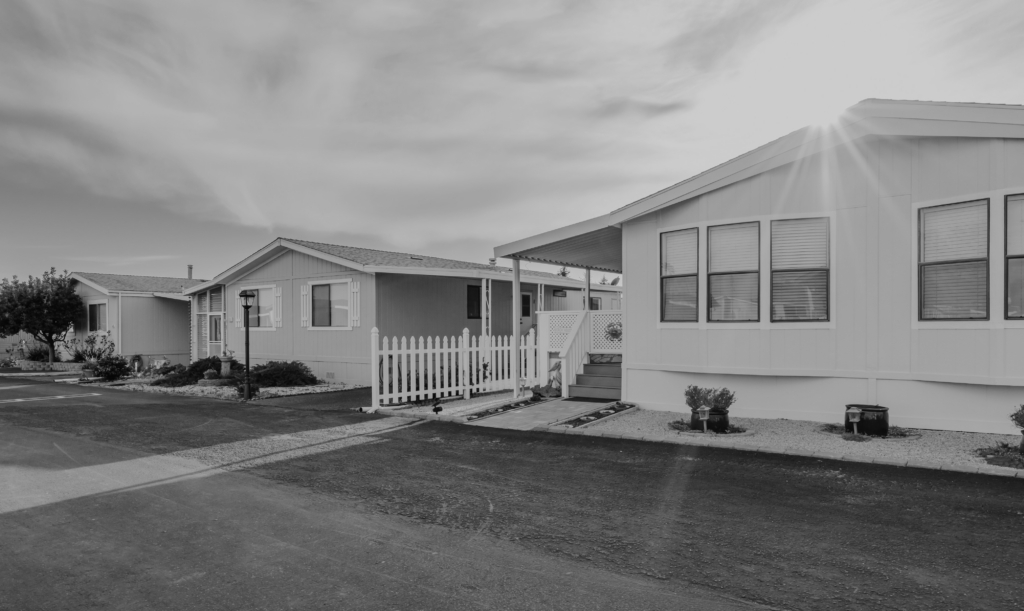
The fundamental distinction is that residents generally own and maintain the homes located within a Land Lease Community and pay a recurring site fee for the land beneath them. The Land Lease Fund or owner retains ownership of the underlying land and responsibility for the community and shared infrastructure, rather than owning every individual dwelling.
That relatively simple distinction can have important implications for both the resilience of income and the costs associated with generating it.
A structure that can support more resilient income
Income is only valuable if it continues to be paid.
For traditional property investors, vacancy can interrupt that income. A commercial tenant may choose not to renew a lease, an increasing factor in today’s changing market. A residential tenant may move out. How quickly another tenant can be found, and at what rent, introduces another variable into future returns.
The relationship is different in a Land Lease Community.
Residents have their own capital invested in a home located on the site, creating a stronger connection to the land it sits on. Leaving therefore involves more than simply ending a conventional tenancy and moving out of a landlord-owned property.
This means there can be no vacancy, the home owner is liable for the rent and this helps provide greater continuity of site-fee income.
The same structural characteristic is relevant to non-payment.
In a conventional tenancy, the tenant occupies an asset owned by the landlord. In Land Lease, the resident owns the home but pays a recurring fee for the site on which it is located. Their own capital is therefore tied to an asset located within the community.
That creates a stronger connection between the resident, the site and their ongoing site-fee obligations. Any unpaid rent can be taken from an eventual sale of the home.
For investors, both characteristics can contribute to a more resilient recurring income base.
A clearer mechanism for rental growth
There is another variable that can have a significant influence on traditional property returns: what happens when it is time to set the next rent.
In commercial property particularly, a major lease expiry can introduce uncertainty. The rent ultimately achieved may depend on prevailing market conditions, tenant demand, incentives, competing properties and the relative negotiating position of landlord and tenant.
Land Lease site fees operate differently.
Rather than relying on major periodic lease negotiations with individual commercial tenants, site-fee reviews are established through site agreements and the relevant regulatory framework.
In most Australian states, tenure can be perpetual, and, even in WA, where agreements may operate on five-year terms, the structure provides greater income continuity without the need to repeatedly renegotiate occupancy.
Importantly, site-fee increases can build on this established recurring income base, growing revenue without needing to secure a new tenant or renegotiate the fundamental occupancy arrangement.
That doesn’t mean rental growth is guaranteed or unlimited. Affordability, regulation and market conditions remain important considerations.
But it can provide greater visibility around how and when site fees are reviewed, rather than leaving future income dependent on a major lease negotiation at the end of an occupancy period.
Combined with longer resident tenure and the relationship between home ownership and the underlying site, this is another structural feature that can support income resilience over time.
Lower exposure to repairs and maintenance
Resilient income is also about what needs to be spent to maintain it.
Buildings require ongoing investment. Repairs arise, fixtures and systems wear out, interiors need updating and properties need to be maintained to remain attractive to current and future tenants.
Those costs can reduce the income ultimately retained by the property owner, and they aren’t always predictable.
In Land Lease, residents generally own, repair and maintain their individual homes.
The Fund still has important responsibilities. Common areas, community facilities, infrastructure and the broader quality of the asset all need to be maintained and actively managed.
But it does not carry the same repair and maintenance responsibility for every individual dwelling or complex building systems and components as a commercial property, such as lifts and alarm systems.
That distinction can reduce both the level of building-related overhead and some of the uncertainty around the costs required to maintain the income-producing asset.
The capex equation changes too
Beyond day-to-day maintenance sits a larger property consideration: capital expenditure.
Traditional building owners may periodically face substantial costs to replace major systems, refurbish ageing buildings, meet changing standards or simply maintain an asset’s condition and competitiveness.
Land Lease changes both where that capital sits and how much may be required. Residents generally carry the capital requirements associated with their own homes, leaving the Fund responsible for common areas, infrastructure and amenities, typically a significantly less capital-intensive proposition than maintaining an entire residential or commercial building.
The Fund can still choose to deploy capital to improve amenities, add infrastructure or enhance an asset to create value. But there is an important distinction between capital invested to drive an outcome and capital required simply to maintain a building.
For an actively managed Land Lease strategy, that can mean a lower ongoing capex burden, while retaining the ability to invest selectively where there is potential to enhance income or value.
Less exposure to building depreciation and obsolescence
Then there is the longer-term question of what an investor actually owns.
Buildings age. They can become physically dated, require increasing amounts of capital or become less suited to changing tenant expectations. A property investor therefore needs to consider not only the value of the underlying land, but the ongoing economic usefulness of the building sitting on it.
In Land Lease, residents own the individual homes while the Fund retains the underlying land.
Community infrastructure and improvements still require investment and may depreciate, so depreciation doesn’t disappear from the equation. But the Fund has less direct exposure to the depreciation and obsolescence of every individual dwelling.
Over the longer term, that leaves the investment centred on an asset that is fundamental to the strategy: the land itself.
Fewer traditional property unknowns, not an absence of risk
None of this makes Land Lease risk-free.
The quality and location of the asset matter. Acquisition price matters. Resident affordability and occupancy matter. Communities need to be well operated. Shared infrastructure requires investment. Regulation needs to be understood and managed.
But the structure means some of the variables familiar to traditional property investors operate differently.
Vacancy and non-payment take on a different dynamic when residents have their own capital invested in a home on the site. Rental growth follows an established mechanism rather than relying solely on major lease-renewal negotiations. Residents carry much of the responsibility for maintaining and investing in their individual homes. And the Fund has less exposure to dwelling-level capex, depreciation and obsolescence.
For AVARI Capital’s Alternative Accommodation Fund, these characteristics support a broader investment proposition:
Resilient income from operating assets, fewer traditional property exposures, multiple potential drivers of return and the potential for long-term value through ownership of the underlying land.
Land Lease doesn’t remove property risk. It changes the equation. Importantly, it can change how much uncertainty sits between the income an asset generates and the return ultimately delivered to investors.